
By Asher Ngoi and Grace Deih


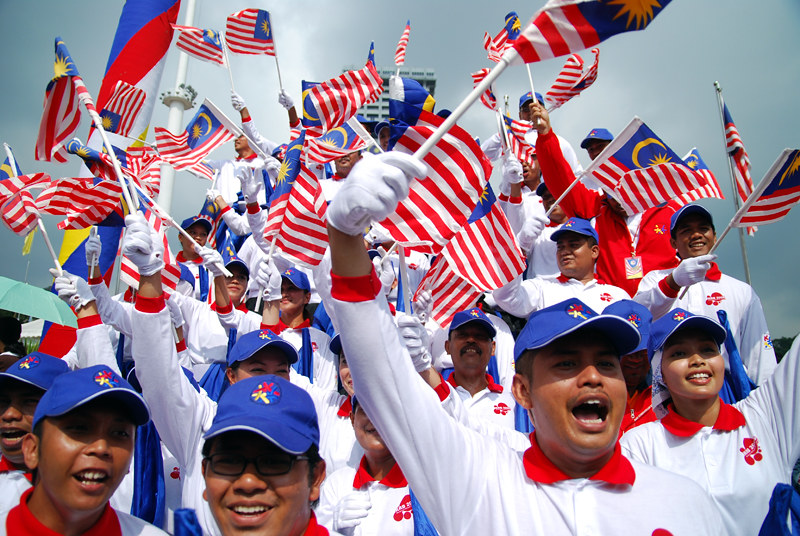
Undoubtedly, Malaysia stands as an enriching and unforgettable destination for anyone seeking a multicultural experience. This nation showcases a harmonious blend of religions, ethnicities, cuisines, and languages from around the world. This unique fusion creates an identity where traditions coexist in harmony, shaping a rich and dynamic societal landscape that reflects the world's intricate diversity. Spanning various corners of Asia, Malaysia boasts an abundant array of diverse individuals, cultures, and religions. Renowned for its rich cultural tapestry, diverse cuisines, and a myriad of ethnic groups, Malaysia also treasures time-honored traditions, vibrant festivals, and a remarkable linguistic diversity spanning 137 languages. Beyond this, Malaysia offers a plethora of special experiences, ranging from its tantalizing cuisine and captivating history to its picturesque locales and the warmth of its people.
Malaysia's population comprises 61.7% Malays, 20.6% Chinese, 6.2% Indians, and 11.3% from different ethnic groups. The Malays form the largest segment, representing over 50% of the population. Their primary religion is Islam, and their main dialect is an Austronesian language. Cultural distinctions become more pronounced near the southern tip of Malaysia and the eastern and western coastal regions. The Chinese constitute the second-largest ethnic group, comprising one-fourth of the population. Their linguistic diversity includes dialects such as Hokkien, Hainanese, Cantonese, and Hakka. In Malaysia, the Indian ethnic group constitute approximately 6.2% of the population and adds a rich and distinct cultural tapestry with their diverse languages, traditions, and contributions to the country's multicultural landscape.
Malaysia boasts around 50 festivals. The three major races celebrate Chinese New Year (Chinese), Deepavali (Indian), and Hari Raya Aidilfitri (Malay). Other festivals include Christmas, the Dragon Boat Festival, Hari Raya Haji, Wesak Day, and more. Hari Raya Aidilfitri marks the end of the Islamic holy month of Ramadan. Chinese New Year signifies new beginnings, while Deepavali celebrates the victory of Ramachandra over the demon king Ravana. Cleaning homes and ancestral worship mark Chinese New Year. On Diwali, people wear their finest clothes, illuminate their homes with lamps and rangoli, perform worship ceremonies, light fireworks, and indulge in family feasts. Malays celebrate Hari Raya Aidilfitri with prayers, seeking forgiveness, visiting the deceased, and lighting lamps called "pelita." These festivals foster unity among different communities and provide a window into Malaysia's diverse traditions and values.
Malaysians communicate through a variety of languages. Among the Chinese in Malaysia, Hokkien is the dominant dialect, followed by Cantonese, Hakka, Teochew, Fuzhou, Hainanese, and Foochow. Indians predominantly speak Tamil, followed by Telugu, Malayalam, Hindi, Punjabi, and Gujarati. Malays, on the other hand, use languages such as Bahasa Malaysia, Kelantanese, Terengganu, Kedahan, Sarawakian, Bajau, Negeri Sembilan Malay, Banjar, Bruneian, and Indonesian. In addition to this, Malaysia's cuisine is a splendid tapestry of diversity, featuring delights like Laksa, Roti Canai, and Butter Chicken. The Cantonese dish Lo Hei, meaning "Toss Up," symbolizes new beginnings. Nasi lemak, a Malay dish cooked with coconut milk, is considered the national food. Satay, skewered cutlets of beef or chicken, exemplifies the cultural fusion of flavors. Food unites people across cultures, fostering mutual understanding and celebrating traditions.
Malaysia, a multicultural nation, boasts diverse religions, ethnicities, cuisines, and languages. Renowned for its rich cultural tapestry, vibrant festivals, and linguistic diversity, Malaysia embraces 137 languages. The country's unique culture is embodied in dishes like 'Lo Hei,' the Roti Canai, and Nasi lemak. The diverse languages mirror cultural richness and coexistence. Food serves as a universal language, uniting people through shared experiences and celebrating traditions. By interacting and building bridges of trust and respect, we understand the beauty of Malaysia's multicultural tapestry. The amalgamation of languages and cuisines reflects the diverse population's cultures. The celebration of languages and traditions contributes to Malaysia's distinct environment, making it an ideal destination for cultural immersion and vibrant communities. Malaysia's languages and cuisines create lasting memories, offering an unparalleled experience that truly encapsulates the celebration of cultural diversity.